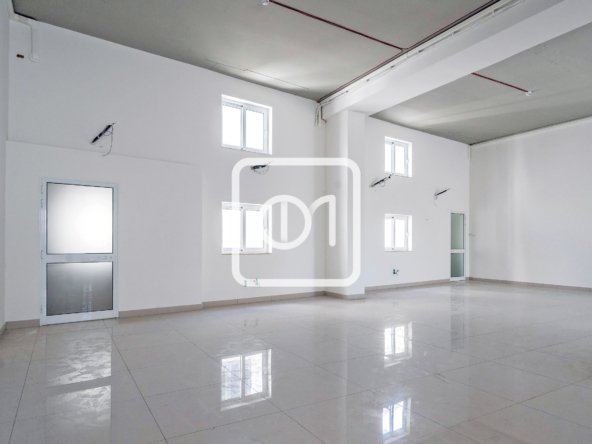
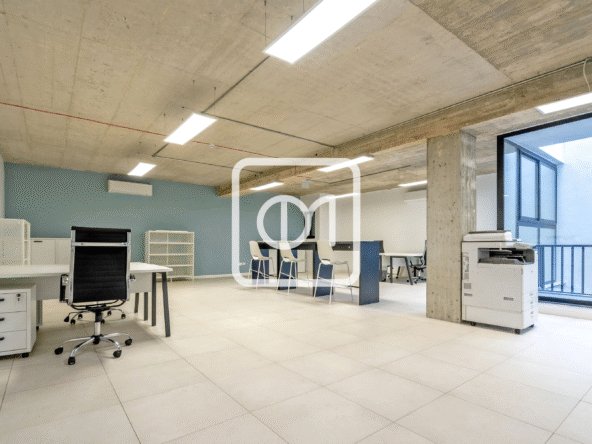
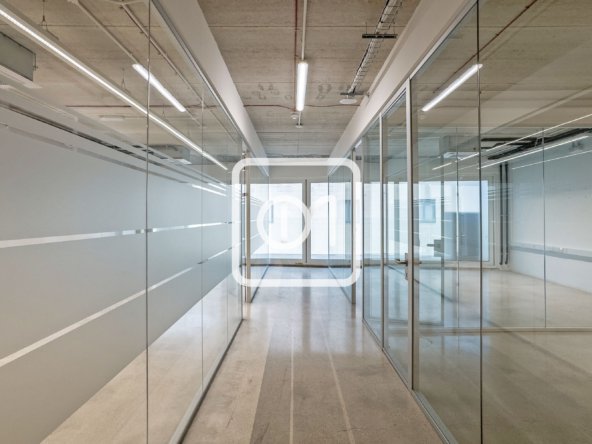
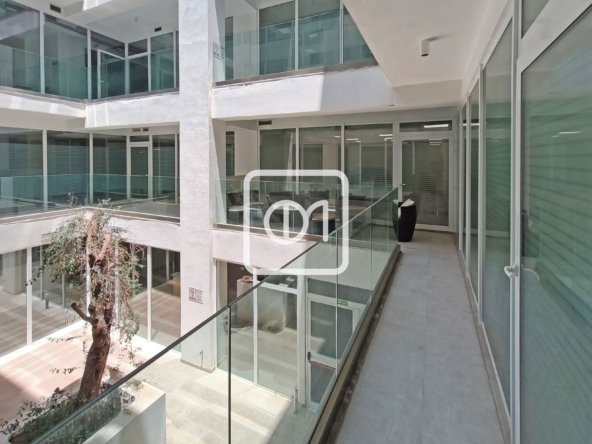
The Central Business District in Malta, commonly knows as Mrieħel or CBD, officially is part of Birkirkara’s city, and is located between Qormi and Ħamrun. From a commercial real estate perspective it has become one of the most important inland office zones in Malta, shifting from a traditional industrial estate into a structured business district serving local and international businesses.
History of the Central Business District in Malta
Originaly, Mrieħel developed as an industrial zone during the second half of the twentieth century. At the time, Malta’s economy was heavily dependent on manufacturing, ship repair and warehousing activity. You will notice fast that this area was planned with functionality in mind rather than aesthetics or mixed use. Large plots, low rise warehouses and industrial facilities still defines part of the landscape.
Its location in the centre of the island made it practical for logistics and distribution, particularly at a time when road infrastructure was less congested than today.
The transformation began in the early 2000s, when Malta’s economy shifted toward services, particularly financial services, aviation, igaming, and international business operations. As demand for office space increased, Mrieħel started it’s commercial redevelopment. Government planning policy, supported by agencies such as Malta Enterprise, boosted the rebranding of the area into a Central Business District. Older warehouses were either refurbished or replaced with modern office blocks, and higher plots quickly utilised.
Tenant profile
From a commercial real estate perspective, the CBD now hosts a mix of corp headquarters, professional service providers, and regional administrative centres. It is not dominated by a single sector, which is part of its resilience. You will find companies operating in financial services, insurance, aviation, compliance, iGaming operations, recruitment and logistics.
Another advantage for businesses is Mrieħel’s accessibility. It sits at a central point between key residential towns and is connected by major arterial roads leading to all parts of the island. While parking availability is increasingly constrained, it’s still more practical than in coastal parts of Malta. Rental prices have traditionally been lower than premium coastal locations, which has attracted cost sensitive international businesses looking for scalable office space rather than prestige addresses.
Central Business District vs St Julian’s and Sliema
When comparing the CBD area with coastal hubs such as St Julian’s and Sliema from business perspective, we can feel some nuances. Locations like St Julian’s and Sliema developed as lifestyle-first business districts, where offices are integrated with retail, hospitality and residential developments. For many international firms, especially those in financial services, igamaing and consultancy, St Julian’s and Sliema offer stronger branding appeal, sea views, and proximity to hotels and restaurants used for client engagement.
This has created a positive split in Malta’s business community. Mrieħel competes on efficiency, space and cost, while beach view office spaces compete on image and first impressions. As a result, some companies started using a hybrid model, maintaining large operational offices in the CBD while keeping client facing teams in St Julian’s or Sliema.
Despite its fast development, Mrieħel still has limitations that are increasingly visible. Much of the area still reminds its industrial past, with inconsistent streetscapes and limited pedestrian infrastructure. While new developments are improving its visual side, the transition is still uneven.
Unlike coastal districts, Mrieħel has limited residential and leisure integration, that support employee lifestyle expectations.
As the area got busier, peak hour congestion has become a real issue for employers, affecting commuting reliability and logistics movement. However, unlike coastal districts, where activity levels fluctuate with tourism cycles, the CBD operates on a stable year round business rhythm.
Mrieħel has become the natural location for companies that prioritise function over views. It offers large headquarters, modern business centres, stand alone offices, co-working spaces and services office centres. While it may not offer the same life style as coastal nubs, its strength is in the fundamentals of commercial real estate: usable space, flexibility, and cost efficiency at scale.